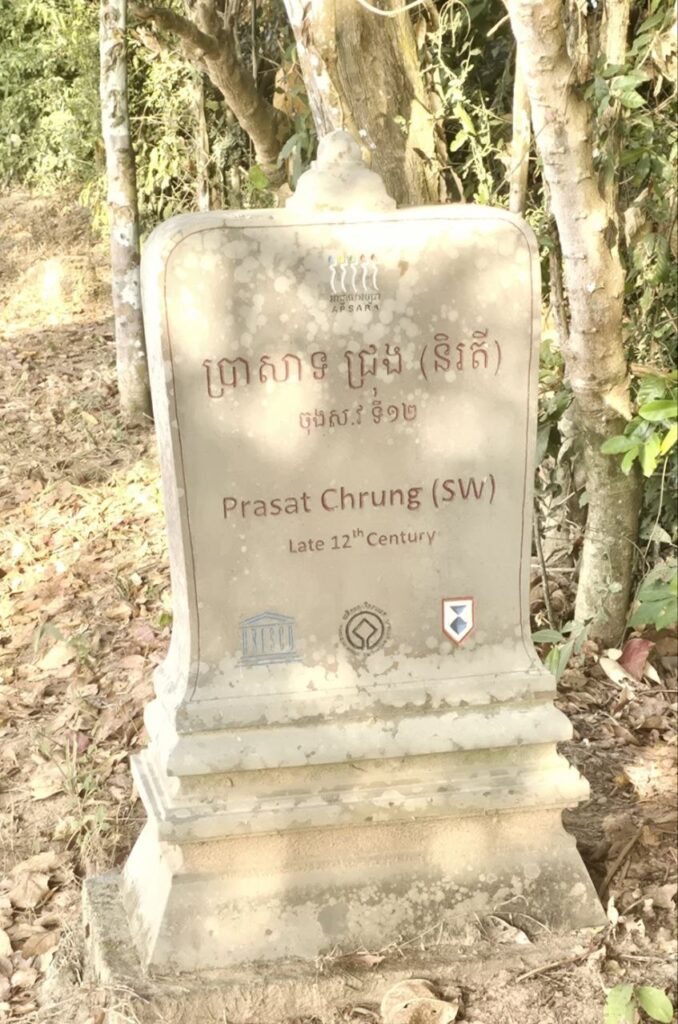
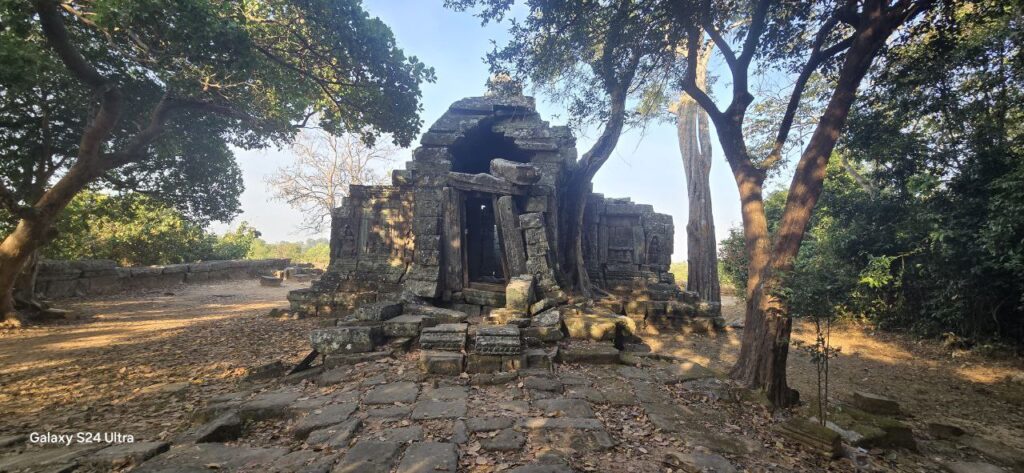
Prasat Chrung Southwest Temple

Blossoming Romduol EXplore
Blossoming Romduol Activity
Blossoming Romduol EXplore
Blossoming Romduol Activity

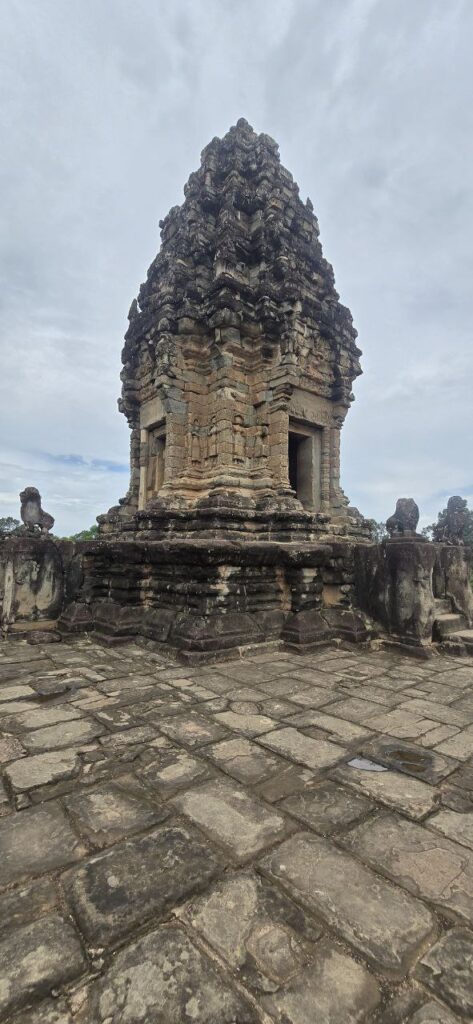
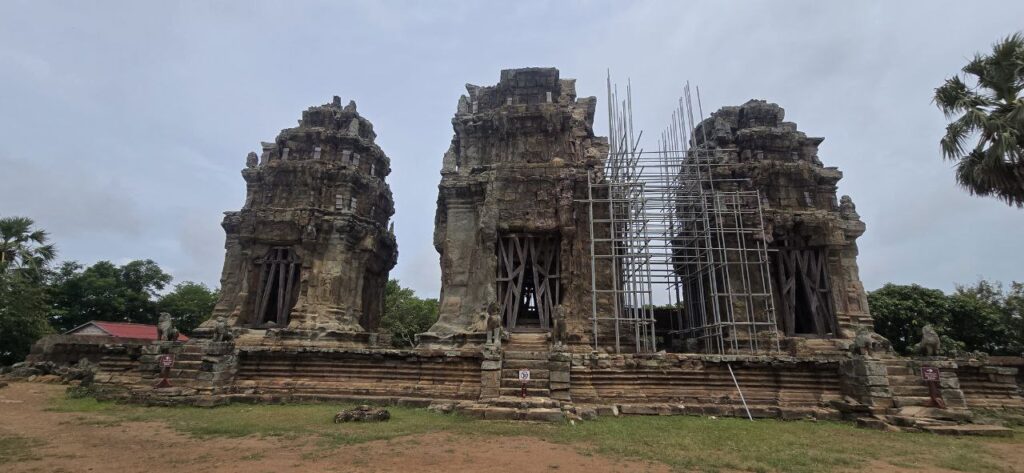
The term Chrung translates to “angel” or “deity” in Khmer, signifying the sacred nature of these corner shrines. Built by King Jayavarman VII in the late 12th century, these four laterite and sandstone temples (Northeast, Southeast, Southwest, and Northwest) were not just religious monuments; they were symbolic anchor points for the cosmic protection of his great city, Angkor Thom.

Perched atop the massive laterite walls (the Prasat itself sits on the earth mound, while the shrine is on the corner), they marked the limits of the king’s power and served as a spiritual shield against evil forces entering from the outside world.

The Experience: A View from the Top
Reaching the Southwest Prasat Chrung requires a short but rewarding journey. You will likely enter Angkor Thom through the famous South Gate (with its iconic causeway of gods and demons). Once inside, follow the road that hugs the inside of the city wall. The path leads you through a tranquil wooded area until you arrive at the mound of the southwest corner.

Here is what awaits you:

The Panorama: This is the main event. From the base of the shrine, you can look out over the vast Western Baray (the enormous man-made reservoir). The view stretches for miles, offering a glimpse of the incredible hydraulic engineering of the Khmer Empire. On a clear day, the sight of water meeting the sky is breathtaking.

The Architecture: The shrine itself is a classic example of Jayavarman VII’s work. Though smaller and more ruined than the state temples, you can still see the characteristic laterite structure, sandstone doorframes, and intricate carvings, including some beautiful apsaras (celestial dancers) and dvarapalas (door guardians). Look closely at the pediments for faded but exquisite bas-reliefs.

The Atmosphere: Unlike the bustling circuit of Angkor Wat or the Bayon, Prasat Chrung is often empty. You might share the space with only a few other explorers or a local monk seeking shade. The sound of wind rustling through the trees replaces the hum of tour buses.

Best Time to Go: Late afternoon. The light turns golden, casting a warm glow on the sandstone, and the view over the Western Baray is spectacular as the sun begins to descend.

How to Get There: The easiest way is to hire a tuk-tuk or bicycle. Tell your driver you want to go to the “Southwest Prasat Chrung” on the Angkor Thom wall. Be prepared for a slightly bumpy road along the wall.

What to Bring: Water, insect repellent (the jungle edge can have mosquitos), and your camera for those wide-angle shots.
Blog Relates

Blossoming Romduol EXplore
Prasat Chrung (SW) is not a contender for the "biggest" or "most ornate" temple. Instead, it offers something perhaps more valuable in a place as visited as Angkor: perspective. It allows you to step back—literally and figuratively—and view Angkor Thom not just as a collection of temples, but as a massive, thriving, and spiritually fortified city. It is a place to sit, reflect, and appreciate the sheer scale of the Khmer Empire while enjoying a moment of peace. So, next time you are exploring Angkor Thom, look to the corners. You might just find your favorite memory waiting there. There are 12km from Siem Reap locate in Angkor Thom area.
Blossoming Romduol EXplore
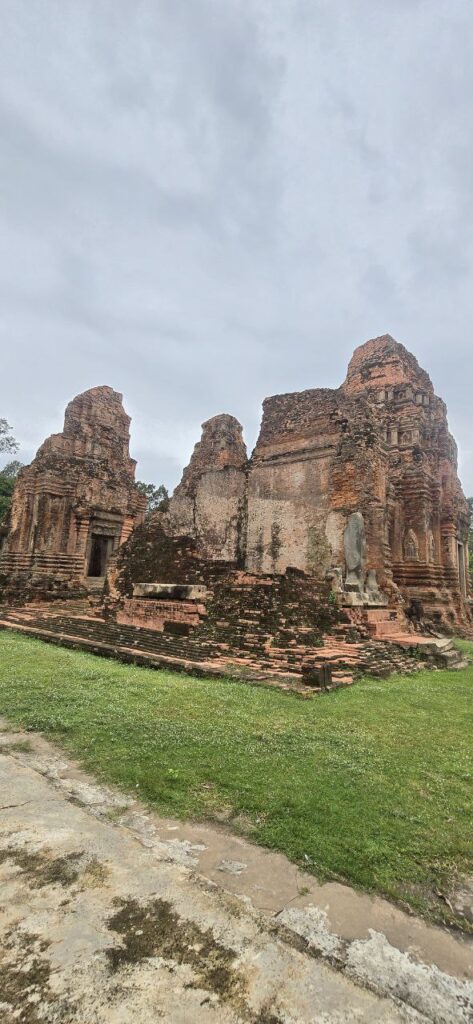
The Roluos Group: Preah Ko is best visited as part of the Roluos Group, which also includes the breathtaking temple-mountain of Bakong and the intricate brick temple of Lolei. Together, they tell the complete story of Hariharalaya, the first capital of the Angkorian empire. Located in the heart of Cambodia’s Roluos group, Preah Ko Temple is one of the earliest and most significant temples of the Khmer Empire. Built in 879 AD by King Indravarman I, this stunning temple complex honors both Hindu deities and the king’s ancestors, blending spiritual devotion with royal legacy.
Blossoming Romduol EXplore
Bakong Temple, located in the Roluos group near Siem Reap, is one of Cambodia’s most significant historical sites. Built in the 9th century under King Indravarman I, it served as the state temple of the ancient Khmer capital, Hariharalaya, and is considered one of the earliest temple-mountains in Khmer architecture.
Blossoming Romduol EXplore
Lolei Temple may be smaller than Angkor’s grand monuments, but its historical importance makes it a must-see for those interested in Cambodia’s rich past.
Blossoming Romduol EXplore
A visit to Phnom Krom offers not only a glimpse into Angkor’s spiritual heritage but also a serene escape from the crowds of more famous temples. Its panoramic vistas and historical charm make it a must-see for history enthusiasts and photographers alike.
Blossoming Romduol EXplore
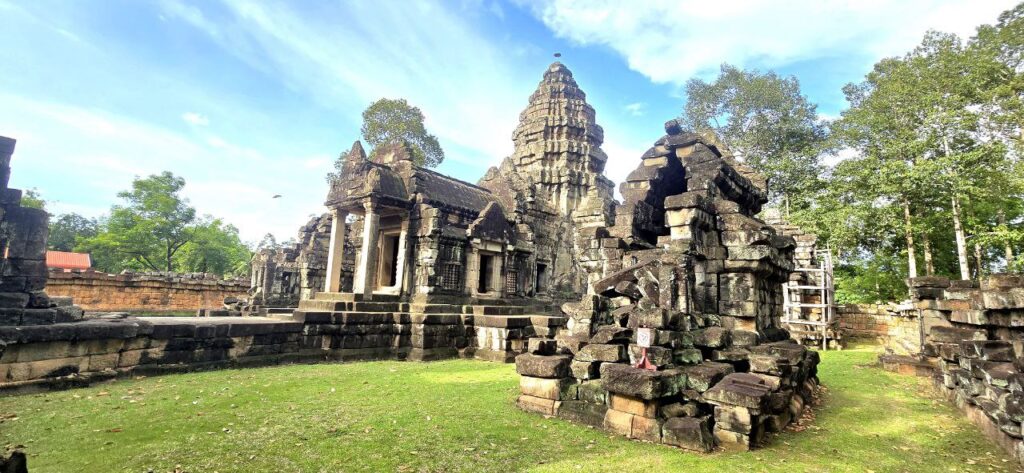
Wat Athvea is a beautiful and lesser-known temple located just a short drive from Siem Reap. This quiet, atmospheric site combines an active Buddhist monastery with the ruins of an ancient Angkorian-era temple, offering a unique blend of history and spirituality. What Makes It Special? Ancient & Modern Harmony: The temple features a well-preserved laterite structure similar to Angkor Wat but on a smaller scale, surrounded by a still-functioning pagoda with vibrant monks’ quarters.